Frederick Bernas is currently living in New York City, freelancing for CNN, Reuters, The New York Times and other media, while studying part-time at Columbia University. During 2008-2010, he was based in Moscow, reporting for The Guardian, Monocle, France 24 and international supplements of the Daily Telegraph and Washington Post.
audio
Cultures collide at Cumbre Tajín folk festival

Cultures collide at Cumbre Tajín folk festival

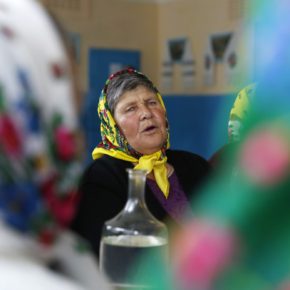
The Cumbre Tajín festival celebrates indigenous identity, combining scores of cultural activities with a distinctly popular musical lineup. Traditional folk dances share a stage with the likes of Fatboy Slim – but does this formula work? This story was broadcast on Monocle 24 radio.
Archery on the rise in NYC

Archery on the rise in NYC

The U.S. men’s Olypmic team won silver at London 2012, and “The Hunger Games” film broke box office records. The main character was a highly skilled archer – so could she be a new Robin Hood for today’s generation? This story was broadcast on Monocle 24 radio.
Saving Mexican culture with cocktails

Saving Mexican culture with cocktails

By using traditional ingredients to create original beverages, a group of “etnomixologists” hope to preserve indigenous Mexican culture in today’s globalized world. This story was broadcast on Monocle 24 radio.
Interview: Pat Kiernan on the New York media world

Interview: Pat Kiernan on the New York media world

One of the most familiar faces in New York television is Pat Kiernan. He’s anchored the morning show on NY1 – a 24-hour news channel – for the last 15 years, and it’s become an essential way to start the day for many in the city. This interview was broadcast on Monocle 24 Radio.
Interview: Todd Gitlin on Occupy and the election

Interview: Todd Gitlin on Occupy and the election

Occupy Wall Street may have all but disappeared from the news, but Professor Gitlin – author of a book about the campaign – believes its impact on political discourse has been significant, and could shape policy in a second Obama administration. This interview was broadcast on Monocle 24 Radio.
The Half King: A refuge for New York journalists

The Half King: A refuge for New York journalists

Reporters from far and wide flock to the world’s media capital in search of stories and opportunities. Twelve years ago, three journalists decided to create a place for this community to hang out, share secrets and enjoy good food and drink – all under one roof. This story was broadcast on Monocle 24 Radio.
Occupy protesters target Frieze art fair

Occupy protesters target Frieze art fair

On May 4-7, thousands of visitors flocked to Randall’s Island in New York for the city’s first ever Frieze art fair. Galleries reported promising profits during a sellout weekend, but on Sunday afternoon, a small group of activists and artists gathered outside to make a noisy stand about commercialization of the creative world.
The 99% Spring: What next for Occupy?

The 99% Spring: What next for Occupy?

Last year, Occupy Wall Street triggered waves of international protest when a ragged group of activists set up camp in a New York park. As winter arrived and the occupiers were evicted, questions emerged about the movement’s future – but plans are currently afoot for a big summer campaign in cities across America.
How Lenin and Red Square ended up in NYC

How Lenin and Red Square ended up in NYC

In the mid-1990s, a bronze statue of Lenin suddenly appeared on New York's Lower East Side – and became an unlikely symbol of gentrification in this gritty urban neighborhood...
In conversation with Emanuel Pimenta

In conversation with Emanuel Pimenta

Emanuel Pimenta is an intermedia artist who was born in Brazil and now lives between Switzerland and America. He pioneered the concept of "virtual architecture," has collaborated with contemporary musical luminaries like John Cage, and holds exhibitions around the world. This interview was broadcast on Monocle 24 Radio.
Latinos tell ABC: “We’re not drug dealers”

Latinos tell ABC: “We’re not drug dealers”

In January, a new ABC comedy called "Work It" was dropped after just two episodes. The show received sharp criticism for its depiction of cross-dressing men, but one particular scene stuck in the heads of Hispanic New Yorkers – and they've been protesting ever since.
Al Jazeera campaign attracts 23,000 supporters

Al Jazeera campaign attracts 23,000 supporters

Al Jazeera English is available in some 250 million households around the world – but in the United States, it’s a different story. A group of activists recently gathered 23,000 signatures demanding that Comcast – one of the biggest American cable companies – provide A.J.E. to all its customers.